From lab to liquidity: IPO readiness for healthcare companies
Read full transcript
Ankur Nanda 0:01
Welcome back to Prosperity At Work, from JP Morgan Workplace Solutions, the podcast all about equity compensation, financial well being and more. I’m your host, Ankur Nanda, from JP Morgan Workplace Solutions. Today we’re launching our 2026 series on IPO readiness, and the timing couldn’t be better.
We’re recording from the 44th annual JP Morgan healthcare conference in San Francisco, where we anticipate a major focus on the transition to public markets. This is naturally rooted in financial fundamentals, but we’re asking, what does it take to prepare the people behind the ticker? What is the human side of IPO readiness? How does a founder and their talented employee base make the transition to the public markets.
To help us set the stage and shed light on what will no doubt be key themes this year, we’re joined by two industry professionals, Sam Quinn and Chris Dohrmann. Sam Quinn is head of the healthcare practice for the JP Morgan Private Bank in the Northeast. Chris Dohrmann is a 30 year veteran of the equity compensation community and my colleague at JP Morgan Workplace Solutions. Sam and Chris, welcome to the show.
Both 1:18
Thanks, Ankur. Thanks, Ankur, thanks for having us.
Ankur Nanda 1:22
Let’s kick off with you Sam. You’re a trusted advisor to scores of founders and executives in the healthcare sector. Tell us about their journey. These are individuals who are talented and have poured their lives into securing their company’s success.
Sam Quinn 1:37
Thanks Ankur, and that’s exactly right, and quite frankly, that passion becomes part of the issue. Founders and executives focus so keenly, as they should, on building the commercial interests of their companies that often personal planning takes a backseat. My team pays particular attention to and has a particularly granular focus on what we call pre-transaction planning. So the steps that executives need to take leading into a strategic transaction, whether that’s an IPO or a sale, to ensure that their balance sheets are structured properly. Too many times, either because of poor planning or no planning at all, we have seen executives leave millions of dollars on the table, not hyperbole, not exaggeration, literally millions of dollars of personal value left on the table in a deal because of poor planning. And we see it a lot.
Ankur Nanda 2:33
That really hits hard, Sam and amongst the three of us, what you’re saying sounds like common knowledge, but in fact many founders and healthcare industry professionals are very seldom privy to the planning and education that’s needed for a successful exit. There’s hundreds of founders and executives attending the conference this year. What would you say to them on when is the best time to start engaging with you?
Sam Quinn 2:58
So it sounds cliche, but the earlier, the better. It’s never too early to begin a conversation. We often speak to founders and executives at the first stages of company formation, where very simple steps, very simple planning with low economic cost can set you up for tremendous value creation in the future. And it’s something that just often gets missed because people are so focused on all the work it takes to get their companies off the ground.
Ankur Nanda 3:28
That’s really interesting. Sam, you talk about value creation and personal equity, we’re all wondering, when a founder or an executive begin a dialogue, why is it so far in advance?
Sam Quinn 3:43
The earlier the dialogue happens, the more flexibility the executive have. It really affords founders and executors more optionality when it comes to structure. It factors into a number of personal planning pillars. It factors into tax planning with something called QSBS, Qualified Small Business Stock, section 1202 of the IRS tax code, a very powerful piece of tax code that allows founders to avoid millions in capital gains taxes if their companies are set up properly, and if executives are aware of their QSBS eligibility. It factors into compensation with incentive stock option planning, where early exercise of ISOs incentive stock options can be done in a way to avoid taxes on execution.
What that does is it starts the clock ticking for long term capital gains and QSBS eligibility, and finally, thinking about executives personal legacy and their children and generational wealth, it factors into estate planning and trust structure, whereby, if you move shares of your company into a trust when the valuation is low, all of the future growth happens outside of your estate transfer, tax free. So it factors into legacy planning, factors into compensation planning, and factors into tax planning. All of these things are better done at the early stages of company formation, in advance of a transaction, and can create a tangible impact on personal value creation well down the road.
Ankur Nanda 5:19
Sam, you’re hitting on the crux here, early preparedness and readiness is key to the foundations that you just laid out, and our teams across the Private Bank and Workplace Solutions are helping founders and management secure their financial futures in any transaction and well in advance of an IPO event. Sam, it’s such a pleasure to have you on and thank you for sharing these insights. We’re looking forward to hearing your thoughts post conference.
Sam Quinn 5:44
Thanks, Ankur, appreciate speaking with you today.
Ankur Nanda 5:48
So now that Sam’s covered personal liquidity with the top of the house, let’s turn to the broader organisation, the rest of our talent pool. Chris, I want to highlight a critical timing issue for companies this year when building compensation packages for healthcare specialists. We urge clients to leverage the private advantage, the so called massive window of opportunity that could favour all of their employees. Can you tell us why?
Chris Dohrmann 6:12
You’re absolutely right. As a private entity, you have significant leeway to modify equity compensation plans and introduce new employee incentives quickly.
Ankur Nanda 6:59
Because once they ring the bell, they need wider shareholder approval for any changes. So it serves companies really well to finesse their strategy before they list.
Chris Dohrmann 7:08
Absolutely, the mantra is, act before the S-1.
Ankur Nanda 7:12
Chris, let’s play devil’s advocate. Even with the S-1 ready, we know IPOs can stall. From a tactical perspective, we’ve seen that one of the biggest risks to a smooth listing is, in fact, the operational readiness of the company, and it could boil down to specific employee and equity compensation risks.
Chris Dohrmann 7:30
I’ll cite three; a messy cap table with stale valuations, an uneducated employee base, or maybe an employee base that’s unfamiliar with equity and the significance of it, or plan features that institutional investors are not aligned with.
Ankur Nanda 7:49
Let’s dive into the first one, cap tables and valuations.
Chris Dohrmann 7:54
It’s a huge potential tripwire in the run up to the IPO. The company needs to bring in outside specialists to assess the Fair Market Value for common stock frequently, perhaps even quarterly. If you’re granting options with a strike price below fair market value during this period, you run afoul of Section 409a and your employees could face heavy tax penalties. You don’t want your top scientists, researchers or employees hitting a tax minefield the same year you celebrate your liquidity.
Ankur Nanda 8:31
And that impacts executives directly as well. So as a public company, there’s a whole host of regulatory considerations. Say we’ve tackled the 409a and the cap table, we need to ensure our scientists or healthcare specialists are well versed in what their equity actually means for the company once it flips to public status.
Chris Dohrmann 9:16
And that’s the culture shock. I think, between the three of us here, we suffer from, what I call, or have been heard, is the curse of knowledge. Much of what we’re talking about here is common knowledge for us, but we have to understand that people that are going into their first IPO really have a lack of familiarity with this. So they need education on things like blackout periods and trading windows. Just because the stock is liquid doesn’t mean that they can sell at will. Management needs to be trained on those public restrictions, otherwise they may accidentally breach the rules.
Ankur Nanda 9:52
Chris here in the US, Food and Drug Administration approvals lead to often binary outcomes for many healthcare start-ups and this can directly impact their innovation pipeline, as well as, of course, their talent. So for blackout periods and trading, what does that mean?
Chris Dohrmann 10:09
You raise a good point. Companies can’t control the FDA approval timing. It’s often a performance trigger and blackouts are not what employees have encountered before. So this is the first time and they really need the guidance on what to expect and when to transact safely.
Ankur Nanda 10:30
Let’s turn to the third and final risk that you mentioned on specific plan features. One key friction point we see in healthcare specifically is the evergreen provision, and that’s the clause that automatically increases the company’s share reserve annually. In fact, institutional investors generally view those as dilution risk to their own holdings.
Chris Dohrmann 10:52
It’s not unusual for companies to have to remove an evergreen provision when they seek shareholder approval post IPO. We also see watch outs like the right of first refusal clauses, where existing shareholders have the right to buy back shares before a third party. They work great for private companies, but in a public market, they become operational roadblocks.
Ankur Nanda 11:19
Chris, how about a company’s equity incentive instrument? To date, we’ve seen the popularity of options as almost a standard for healthcare equity plans. Are the tides shifting, in your view?
Chris Dohrmann 11:32
Yes, proxy advisors and other regulatory issues are causing companies to shy away from options as a vehicle, broadly. They still exist in the C-suite and with founders, but broadly, options are being actively discouraged. I find it personally disappointing, because options are a great vehicle for wealth creation.
Ankur Nanda 12:00
Tell us more about that.
Chris Dohrmann 12:03
The shift has been towards the increased use of RSUs and PSUs. For those that aren’t familiar with that, restricted stock units and performance stock units. The PSU here is one that could cause an issue, because performance provisions are not usually well understood by the recipients, and that should be a red flag. If the employee or the recipient of these awards doesn’t understand the valuable benefit they’re given, the overall goal is diminished
Ankur Nanda 12:36
Thank you, Chris. This has been really insightful, and that’s exactly where we come in. We advise our IPO bound clients on how to rigorously prep their cap tables and their equity compensation strategy for public scrutiny, while simultaneously educating all employees on graduating to public share ownership.
It sounds like the theme for this year is preparedness. Healthcare companies can’t afford to rely on just good science to chart IPO waters. Every company needs an IPO-ready people strategy, and every employee will need their personal wealth strategy working in sync.
For our listeners, if you’re eyeing the 2026 window, JP Morgan Workplace Solutions has released a ‘Going Public: Equity compensation guide to IPO’, covering everything we talked about today, from pre-IPO planning to a handy checklist. It’s available in the download hub on our website jpmorganworkplacesolutions.com.
And that brings us to the end of this special episode of Prosperity At Work from JP Morgan Workplace Solutions.
Thanks for listening.
If you’ve enjoyed this episode, we hope you’ll review rate and subscribe to JP Morgan Workplace Solutions Prosperity At Work available wherever you get your podcasts. You can find further insights on equity compensation, financial wellness and more by following us on LinkedIn or over at jpmorganworkplacesolutions.com.
Until next time that’s Prosperity At Work. Goodbye.
The Prosperity At Work podcast is produced by dustpod.io for JP Morgan Workplace Solutions.
[ENDS]
IPO readiness is one of the key themes at this year’s J.P. Morgan Healthcare Conference in San Francisco. Transitioning to public markets is naturally rooted in financial fundamentals, but what does it take to prepare the people driving this, the founders, senior executives and talent base? And how can they best prepare for the personal liquidity that comes from vesting – and what are some of the unique challenges facing healthcare sector companies planning to IPO in 2026?
Sam Quinn, Head of East Healthcare Practice for J.P. Morgan Private Bank and Chris Dohrmann, Strategic Partnerships for Equity Plan Services, J.P. Morgan Workplace Solutions, join host Ankur Nanda on our Prosperity at Work podcast to share their insights on the potential pitfalls and opportunities.
Among the topics discussed are:
- Passion v planning: How founder focus on growing their business can sometimes lead to their neglecting personal financial needs
- Tax planning for incentive stock options
- Food and Drug Administration (FDA) approvals, blackout periods and trading windows
- The importance of starting IPO conversations early and engaging with the right stakeholders
Listen now!
Do you have a liquidity event in your future? Download ‘Going public: Your Equity Compensation guide to IPO’ here.
The information provided in this podcast is intended for informational and educational purposes only; it is not intended as an offer for any specific product or service. The podcast contains the views of a J.P. Morgan employee, which may differ from the views of J.P. Morgan Chase & Co., its affiliates and employees. The views and strategies described may not be appropriate for everyone. Certain information was obtained from sources we believe are reliable, but we cannot verify the accuracy of the content and we accept no responsibility for any direct or consequential losses arising from its use. You should carefully consider your needs and objectives before making any decisions. For specific guidance on how this information should be applied to your situation, you should consult a qualified professional.
This publication contains general information only and J.P. Morgan Workplace Solutions is not, through this article, issuing any advice, be it legal, financial, tax-related, business-related, professional or other. J.P. Morgan Workplace Solutions’ Insights is not a substitute for professional advice and should not be used as such. J.P. Morgan Workplace Solutions does not assume any liability for reliance on the information provided herein.
Host
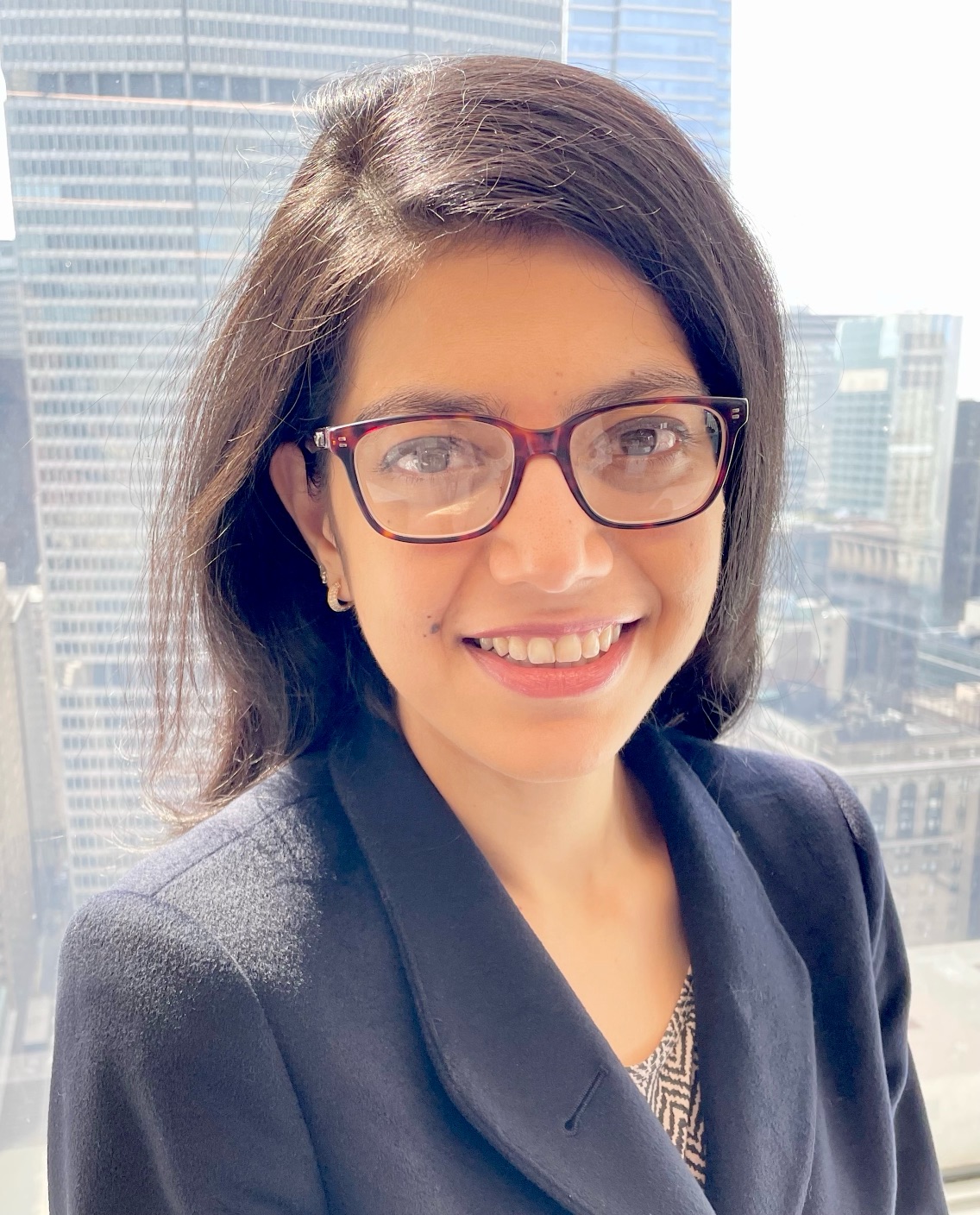
Ankur Nanda
Strategic Partnerships, J.P. Morgan Workplace Solutions
Guests
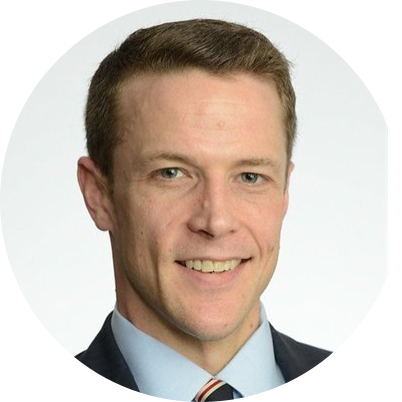
Sam Quinn
Head of East Healthcare Practice, J.P. Morgan Private Bank

Chris Dohrmann
Strategic Partnerships, J.P. Morgan Workplace Solutions