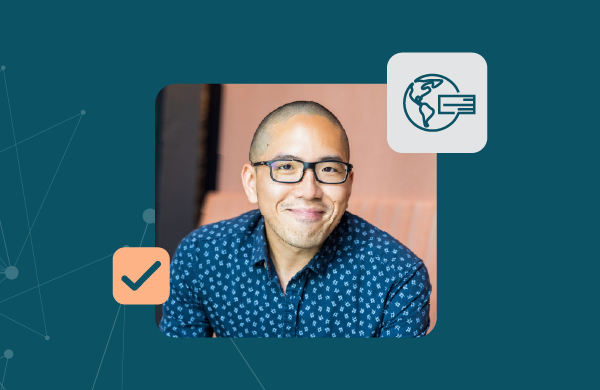
Dexter Tang has seen first-hand how scaling and growth can add layers of complexity to employee stock plans. Learn what’s worked for him across operations, compliance and participant experience.
When it comes to equity compensation, few companies face as much complexity as Google. With employees in more than 62 countries, Google’s equity program touches nearly 40% of its global workforce outside the US. Dexter Tang, Google’s International Equity Compliance and Operations Lead oversees compliance and operations including helpdesk support for this vast program, and shared how his team tackles their work – and what other companies can learn from their experience.
From tax to tech: a career built on curiosity
Dexter began his career in accounting and tax at PwC, focusing on global mobility. Equity was always a subset of that work, and upon joining Google’s equity team in Dublin, it was a natural transition.
That grounding in tax has been crucial. “If you’re not genuinely interested in compliance, it can be a very dry role,” he says. Curiosity, partners you can trust and a willingness to challenge assumptions have been the keys to scaling Google’s program.
Compliance at scale
Managing equity compliance across dozens of countries is complex – and constantly changing. Some updates come with plenty of notice; others land without warning. “The speed of change is what keeps me up at night,” Dexter admits. His advice for peers:
- Stay curious – dig into regulations, don’t just skim them.
- Chose partners wisely – advisors and vendors must understand your standards.
- Challenge assumptions – vendors know the rules, but you know your program best.
Even for companies in fewer markets, this mindset is essential. Curiosity and proactive questioning can prevent costly mistakes.
Harnessing AI and automation
Global programs mean high-volume, high-stakes operations: validating vesting schedules, managing payroll across jurisdictions, and processing monthly grants. Dexter’s team constantly look for ways to make these processes more efficient.
“I always call AI my sidekick,” he says, agreeing that it helps eliminate the ‘no-joy work’. While adoption is still limited in the industry, Dexter sees automation and AI as critical for equity plan scale and resilience.
Measuring ROI
Measuring the impact of equity is not straightforward. Unlike ESPPs, where participation rates are clear, broad-based grants are harder to quantify. Dexter sees two main measures:
- Retention – do employees stay because of equity, and do retention grants work?
- Behavioral data – do employees hold or sell shares, and for how long?
Dexter jokes that the most extreme test is simply to take equity away and see the reaction. But the point is serious: without retention or engagement, the business case for equity weakens.
Education tailored to fit your people
Equity only delivers value if employees understand it. Dexter emphasizes the importance of education tailored to audience, culture, and role.
“Know your demographic. An engineer may prefer technical detail,” he explains. “A salesperson may need a simple analogy. Employees in one country will require different framing than their colleagues in another country.”
The principle: by tailoring messages to employee needs and styles, companies can increase understanding and advocacy.
Balancing global scale with local needs
One of the toughest challenges for global programs is balancing standardization with local requirements. Qualified plans may benefit employees in one jurisdiction, but running multiple local variations isn’t feasible.
“The challenge,” Dexter says, “is how to meet local needs – or influence stakeholders when their requirements can’t be met.” Successful administrators must balance operations efficiency with sensitivity to local expectations.
Vendors: the global mindset required
Vendors play a critical role in equity administration, and Dexter is clear about what he expects:
- Global mindset – avoid a bias to any one market.
- Flexibility – adapt platforms to different reporting and compliance requirements.
- Simplicity – make platforms easy for participants to use.
“Think from your participants’ point of view,” advises Dexter. “If selling a share feels painful, your platform isn’t working.”
Equity in the bigger picture
At Google, equity sits within a broader ecosystem of salary, benefits, and perks – all designed to help employees focus on their work and impact. Equity connects employees directly to company performance: “When a company is successful, you ride the success with the company,” Dexter explains.
That purpose can be easier to communicate when share prices are rising, but it remains the cornerstone of Google’s employee value proposition.
Dexter’s top takeaways
- Engage employees: Fun, simple, relatable messages land best.
- Good reporting: Completeness and accuracy power success.
- Biggest pitfalls: Underestimating complexity – even “simple” RSUs can be challenging.
- Success factors: Partner well, hire well, and always have the right tools.
Google’s equity program may be complex, but Dexter’s advice is universal: stay curious, invest in education, balance global and local needs, and expect more from your vendors. Whatever your company size, these principles can help you deliver value for both employees and shareholders.
Dexter Tang appears on our Prosperity at Work podcast streaming now wherever you get your podcasts.
This publication contains general information only and J.P. Morgan Workplace Solutions is not, through this article, issuing any advice, be it legal, financial, tax-related, business-related, professional or other. J.P. Morgan Workplace Solutions’ Insights is not a substitute for professional advice and should not be used as such. J.P. Morgan Workplace Solutions does not assume any liability for reliance on the information provided herein.